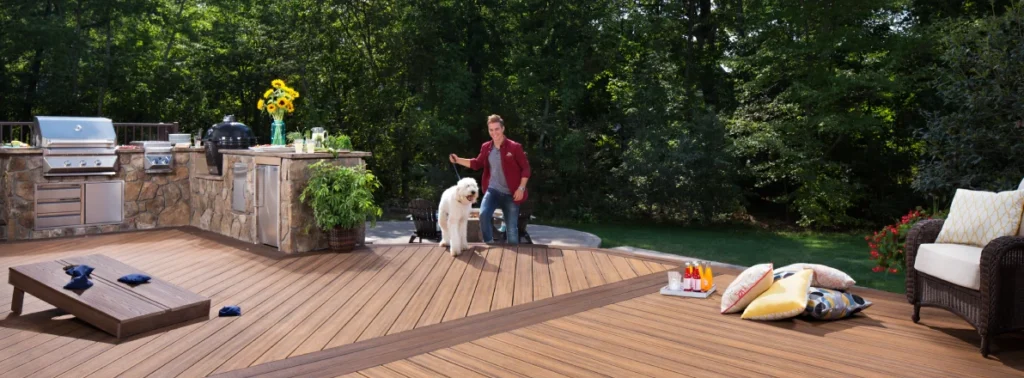
If you're planning to build a new deck or replace an old one, you've probably noticed that composite decking costs more than pressure-treated wood.
That raises a common question for homeowners across Ontario: Is composite decking worth the money compared to wood?
While pressure-treated lumber is usually the cheaper option upfront, composite decking offers lower maintenance, a longer lifespan, and fewer repair costs over time.
If you're comparing composite decking cost, durability, and long-term value, here's what you need to know before making a decision.
Is Composite Decking Worth the Money Compared to Wood?
For most Ontario homeowners, the answer is yes.
Pressure-treated wood costs less at the beginning, but it requires regular maintenance to keep it looking good and protected from the elements. Composite decking is designed to withstand moisture, UV exposure, and Ontario's freeze-thaw cycles with minimal upkeep.
Unlike wood, composite decking won't:
Rot
Crack
Warp
Splinter
Require annual staining or sealing
If you plan to stay in your home for years, composite decking often provides better long-term value than wood.
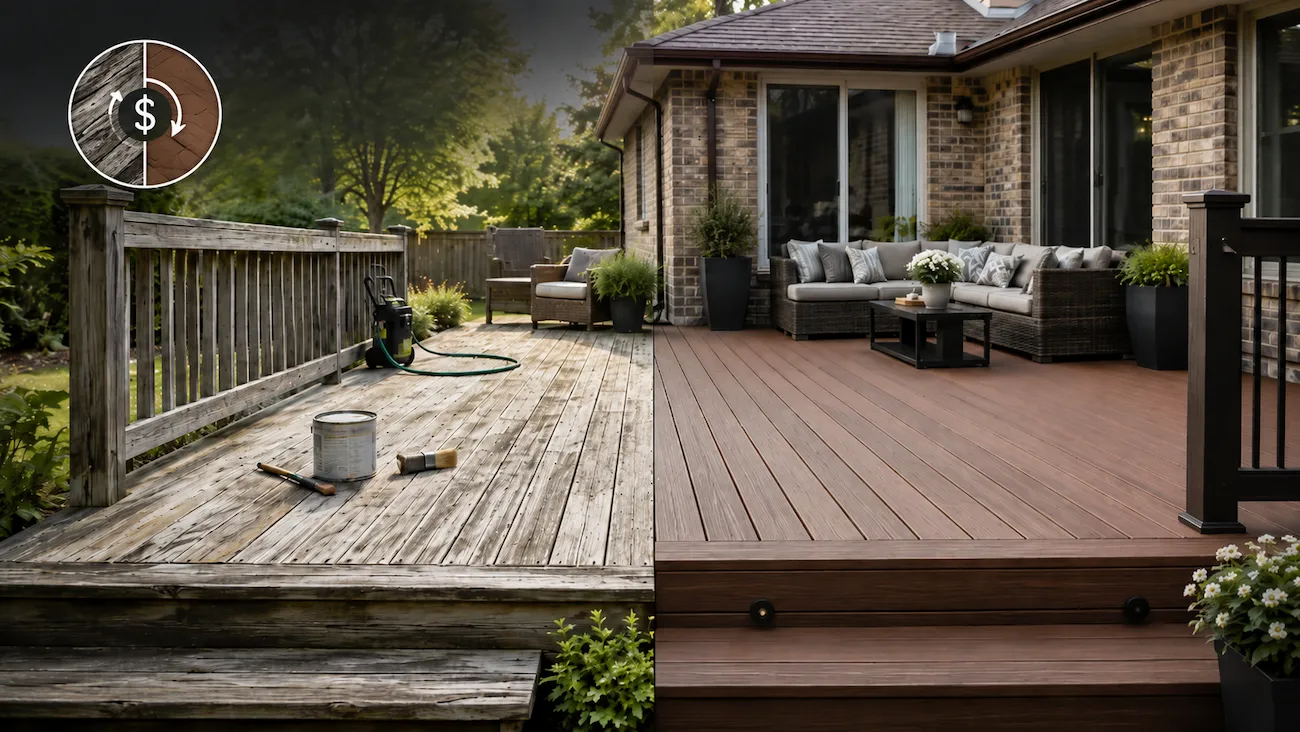
Composite Decking
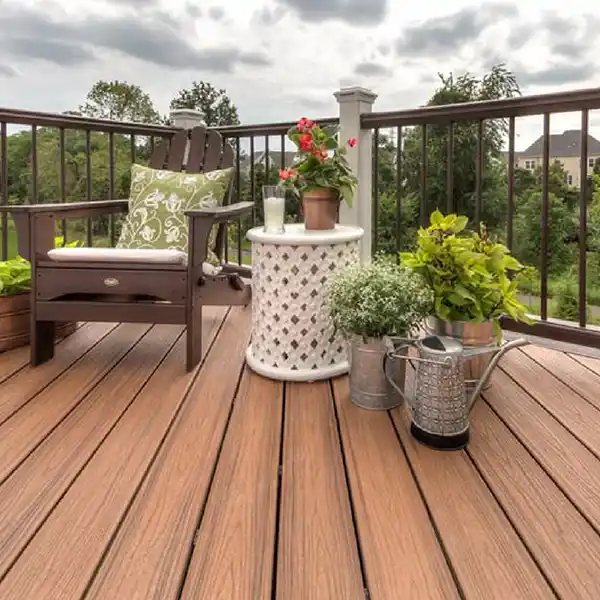
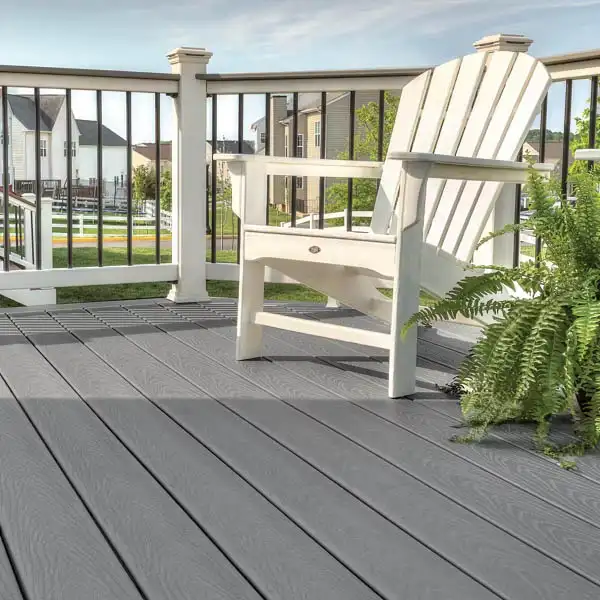
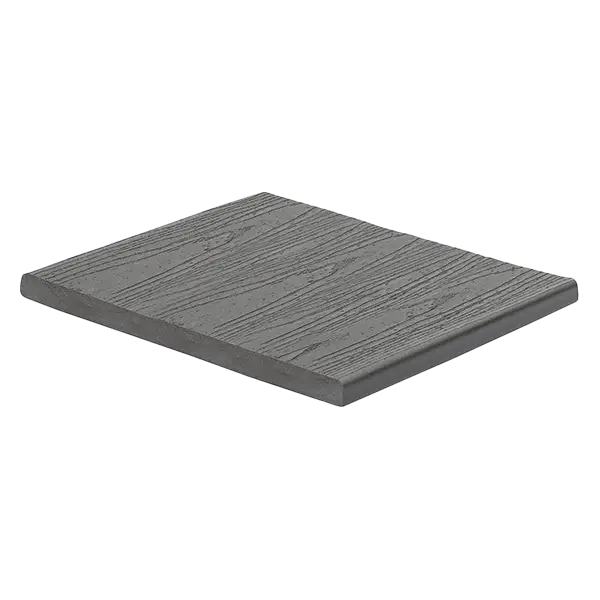
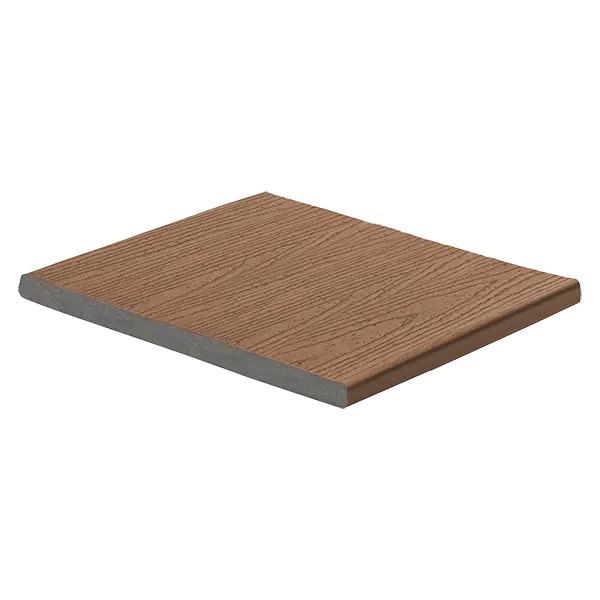
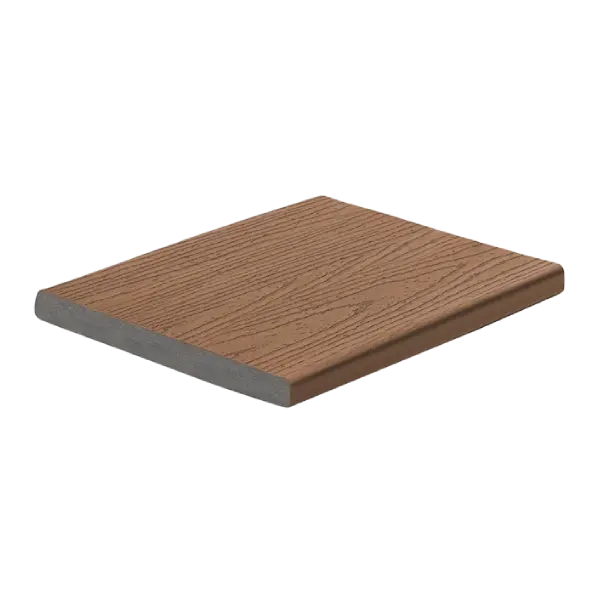
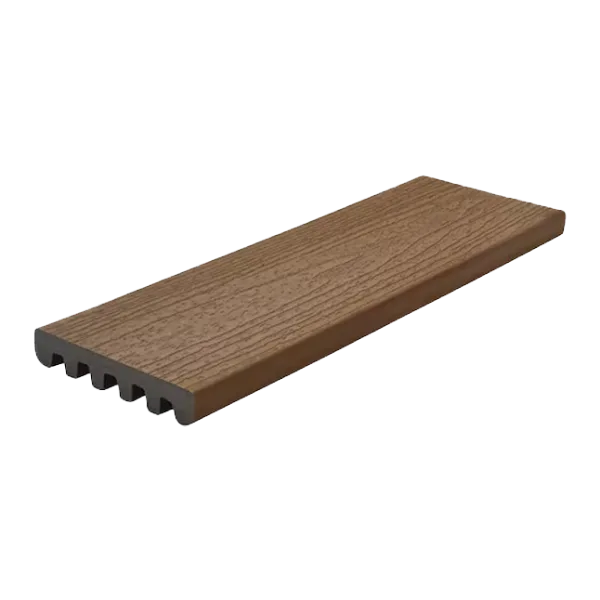
The composite decking side shows a cleaner, stronger, and more modern alternative. Composite decking offers the natural look of wood with better durability, low maintenance, resistance to moisture, fading, splinters, and rot. It is a better long-term choice for homeowners who want a beautiful deck without the constant upkeep of real wood.
Traditional wood
The wood have problems such as splintering, cracking, fading, moisture damage, warping, and long-term maintenance needs. Wood decks often require staining, sealing, sanding, and repairs to protect them from rot and weather exposure.
Composite Decking Cost vs. Wood in Ontario
One of the biggest differences between wood and composite decking is the upfront cost.
A pressure-treated wood deck typically costs between $25 and $35 per square foot, including materials and installation.
Premium composite decking or PVC decking usually costs between $40 and $65 per square foot, depending on the product, colour, and brand.
Important: These prices generally cover the deck frame and deck boards only. Stairs, railings, privacy screens, lighting, permits, skirting, and custom features are not included and can significantly increase the overall project cost.
Composite Decking Price Per Square Foot vs. Wood
Feature
Pressure-Treated Wood
Composite / PVC Decking
Upfront Cost
Lower
Higher
Lifespan
10–15 Years
25–50 Years
Maintenance
High
Low
Staining & Sealing
Required
Not Required
Splinter Risk
High
None
Rot Resistance
Limited
Excellent
Warranty
Limited
Up to 50 Years
While wood may save money initially, maintenance costs can quickly narrow the gap.
The Hidden Cost of a Wood Deck
Many homeowners focus on installation costs but overlook the ongoing expenses that come with owning a wood deck.
Ontario's Freeze-Thaw Cycles Are Tough on Wood
Ontario weather can be hard on outdoor structures.
During winter, snow and ice sit on deck boards for months. In spring, melting snow introduces moisture into the wood. Summer heat then dries everything out.
This constant cycle causes wood to expand and contract, which can lead to:
Cracked boards
Warping
Twisting
Splitting
Surface deterioration
Even high-quality pressure-treated lumber eventually shows signs of wear.
Annual Maintenance Costs Add Up
To keep a wood deck protected, you'll need to regularly:
Power wash
Sand
Stain
Seal
Replace damaged boards
Professional deck staining services in Ontario can cost between $1,500 and $3,000 every few years.
Even if you do the work yourself, you'll still spend money on stains, cleaners, brushes, and equipment—not to mention your time.
Why Composite Decking Saves Money Over Time
One of the biggest reasons homeowners choose composite decking is the low maintenance.
Most composite decks only need occasional cleaning with soap and water.
Because modern composite and PVC boards are engineered to resist moisture, they won't suffer from the same problems as wood.
Benefits of Low-Maintenance Decking
Composite decking offers:
No staining
No sealing
No splinters
No rot
Minimal upkeep
Long-lasting colour retention
This makes composite one of the most popular low-maintenance decking options available today.
When Does Composite Decking Pay for Itself?
While every project is different, many homeowners recover the additional cost of composite decking within approximately 7 to 10 years through reduced maintenance and repair expenses.
After that point, the savings continue to grow.
Best Composite Decking Brands in Ontario
Choosing the right brand is just as important as choosing the right material.
Here are some of the most trusted best composite decking brands available in Ontario.
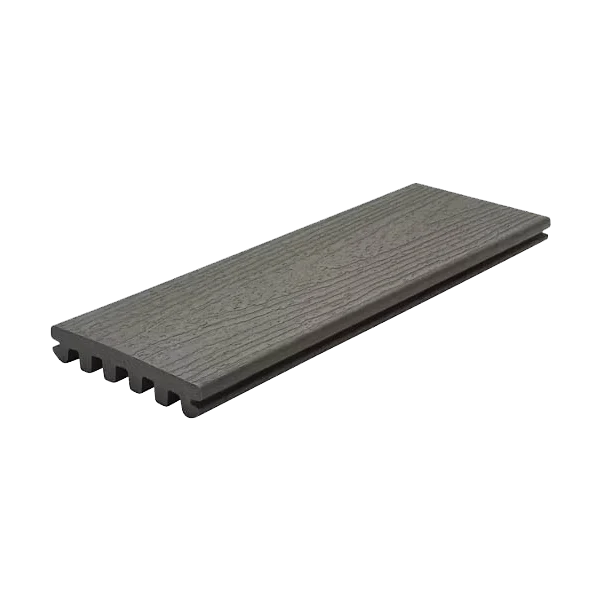
Trex Composite Decking
Trexis known for realistic wood-grain finishes, excellent stain resistance, and environmentally responsible manufacturing.
TimberTech Decking
TimberTech offers premium composite and PVC decking products with advanced protection against moisture and weather damage.
Woodbridge PVC Decking
Designed for Canadian weather conditions, Woodbridge PVC decking delivers durability, realistic wood textures, and excellent resistance to mould and insects.
Fiberon Composite Decking
Fiberon provides a strong balance of performance, appearance, and value across multiple produ
Trunorth Composite Decking
Canadian-made Composite Decking, known for premium durability, slip resistance, and beautiful hardwood-inspired finishes.
Clubhouse PVC Decking
Canadian-made PVC Decking, known for premium durability, slip resistance, and beautiful hardwood-inspired finishes.
Where to Buy Composite Decking in Ontario
Choosing the right supplier can make a big difference in your project.
A specialized decking supplier can help you compare products, view colours in person, and choose the right materials for your home and budget.
National Decking carries many of the industry's leading brands, including Trex, TimberTech, Woodbridge, Fiberon, Trunorth and Clubhouse.
National Decking Mississauga
Serving Toronto, Mississauga, Oakville, Burlington, Milton, and communities across the West GTA.
National Decking Richmond Hill
Serving Richmond Hill, Markham, Vaughan, Aurora, Newmarket, and the North GTA.
National Decking Hamilton
Serving Hamilton, Burlington, St. Catharines, Niagara Region, and surrounding communities.
Visiting a showroom allows you to compare decking colours, board profiles, railing systems, and fastening options before making a final decision.
Final Verdict: Is Composite Decking Worth It?
For most Ontario homeowners, composite decking is worth the investment.
While pressure-treated wood costs less upfront, composite decking lasts longer, requires far less maintenance, and often delivers better value over the life of the deck.
If you're looking for a deck that stays beautiful for years without constant staining, sealing, and repairs, composite decking is usually the smarter choice.
Bottom Line
If you plan to stay in your home long-term, paying more upfront for composite decking can save you time, money, and maintenance headaches for decades.