How Is Composite Decking Made? Manufacturing Process
How Is Composite Decking Made?
Composite decking is made by combining a thermoplastic polymer with wood flour, reclaimed sawdust or another plant-based filler, along with pigments and performance additives. The blended material is heated and formed into a continuous deck board, usually through extrusion.
Many modern composite deck boards also receive a protective polymer cap. This cap helps protect the composite core against moisture exposure, staining, fading and everyday surface wear.
The exact materials, ratios and manufacturing methods vary by brand. For example, an active Canadian Construction Materials Centre evaluation of Trex decking describes boards made primarily from reclaimed hardwood sawdust and reclaimed or recycled polyethylene using continuous extrusion.
Not every composite board contains wood. TruNorth, an Ontario manufacturer, produces a wood-free composite made with rice hulls and recycled plastic at its Brantford facility.
What Is Composite Decking Made Of?
Traditional wood-plastic composite decking usually contains a combination of:
- Wood flour, sawdust or reclaimed wood fibres
- A thermoplastic polymer, commonly polyethylene
- Colour pigments
- UV and weathering stabilizers
- Coupling or bonding agents
- Lubricants and processing aids
- Other performance additives
- A separate capstock polymer on capped products
Some composite formulations use other agricultural or plant fibres instead of wood. Rice hulls, bamboo and other lignocellulosic materials can serve a similar reinforcing or filling function.
The organic component contributes stiffness, bulk and a wood-like feel. The polymer forms the surrounding matrix, binds the ingredients together and reduces the moisture sensitivity associated with unprotected lumber.
Manufacturers may use virgin polymers, recycled polymers or a blend of both. Reclaimed manufacturing by-products and post-consumer plastics may also be used, but the source and percentage of recycled material differ substantially between brands and collections.
Step 1: Preparing the Wood or Plant Fibres
Wood recovered from sawdust, lumber processing or other manufacturing sources is ground into controlled particle sizes. Alternative composite formulas may use prepared rice hulls or other plant-based fillers.
Particle size and consistency affect how evenly the material can be mixed and processed. Oversized or inconsistent particles may contribute to an irregular surface or inconsistent mechanical properties.
The fibres must also be adequately dried. Excess moisture can create processing problems when the material is heated, including poor bonding, voids or surface defects.
A peer-reviewed review of wood-plastic composite materials explains that wood flour production generally includes particle-size reduction, classification and drying before the material is blended with a polymer.
Step 2: Preparing the Polymer
The thermoplastic component is prepared in a form that can be measured and blended consistently with the organic filler.
Depending on the manufacturer and resin type, the plastic may be:
- Sorted
- Cleaned
- Shredded or ground
- Densified
- Pelletized
- Blended with virgin resin
Recycled polymer sources may include plastic film, packaging or industrial processing waste. The acceptable source depends on the polymer chemistry and the performance requirements of the finished board.
For example, Trex reports using reclaimed wood and recycled polyethylene film in its composite decking. This is a brand-specific formula and should not be treated as the formula for every composite product.
Step 3: Blending the Composite Formula
The prepared fibres and polymer are measured and combined with pigments, bonding agents, lubricants and other additives.
This stage is often called blending or compounding. The objective is to distribute the ingredients evenly throughout the mixture before the board is formed.
The formula can affect:
- Board density
- Stiffness and strength
- Flexibility
- Colour consistency
- Moisture absorption
- Thermal movement
- Impact resistance
- Surface durability
- Processing temperature
Manufacturers use proprietary ratios and additive packages. Two boards that look similar may therefore have different expansion rates, structural properties, installation requirements and warranties.
Step 4: Heating and Compounding the Material
The composite mixture enters processing equipment where it is heated and mechanically mixed.
As the polymer softens, it begins to surround and bind the wood or plant particles. The material must become sufficiently workable to move through the extrusion equipment without overheating or damaging the organic component.
Temperature control is important because wood and other plant fibres can degrade when exposed to excessive heat.
Some manufacturers compound the ingredients into pellets before producing the final board. Others combine compounding and profile extrusion in one continuous manufacturing line.
Step 5: Extruding the Deck Board
The heated composite material is forced through a shaped opening called a die. This continuous forming process is known as extrusion.
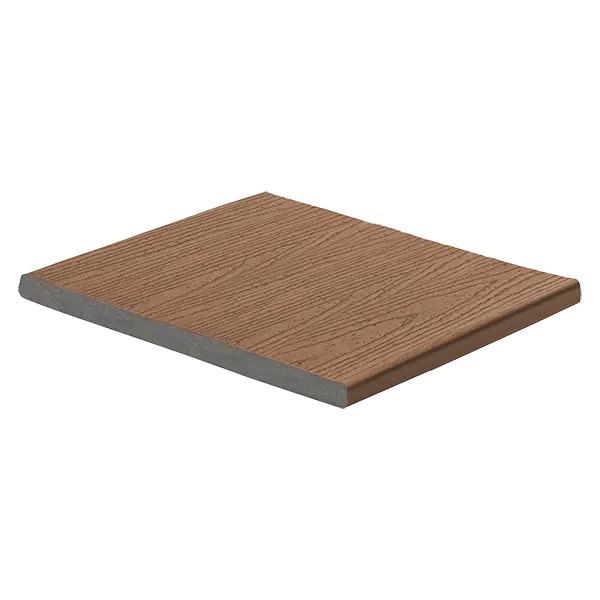
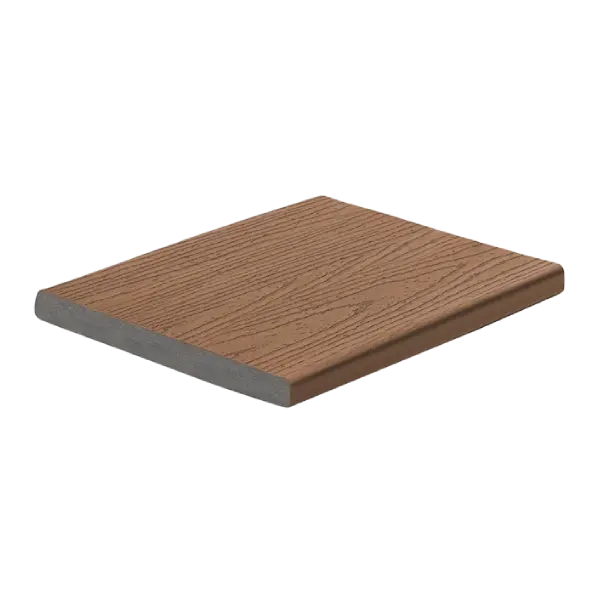
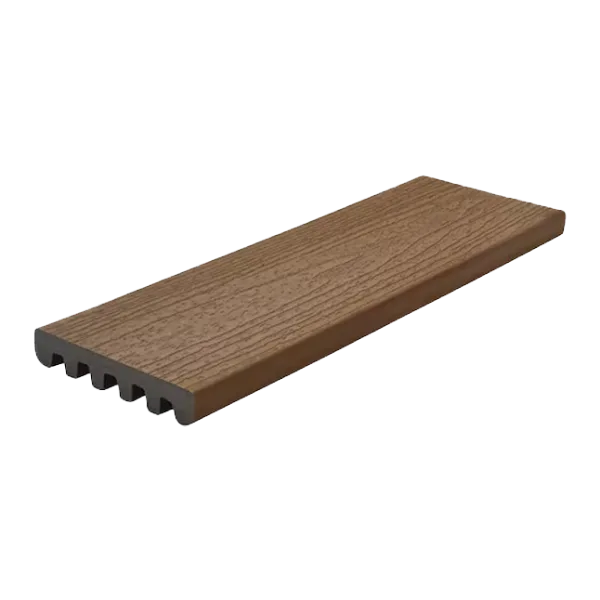
The die establishes the main dimensions and cross-sectional profile of the deck board. Depending on the product, the resulting profile may be:
- Solid
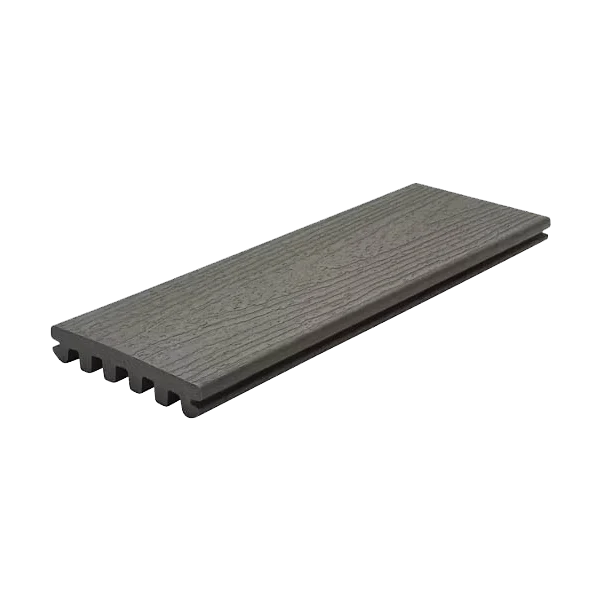
- Scalloped on the underside
- Hollow-core
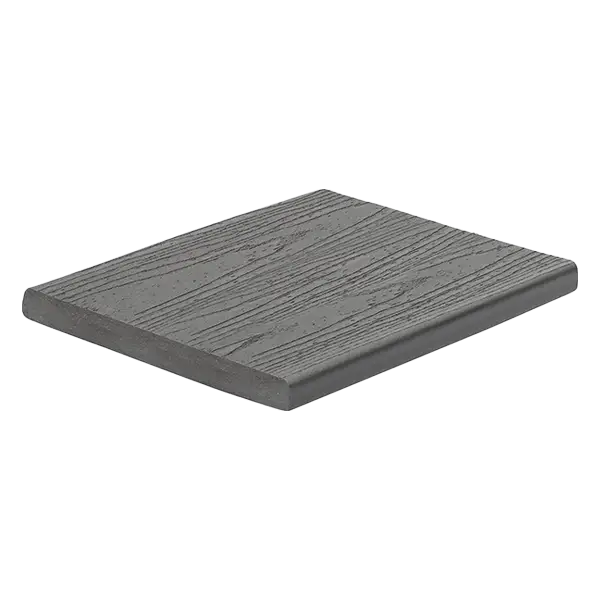
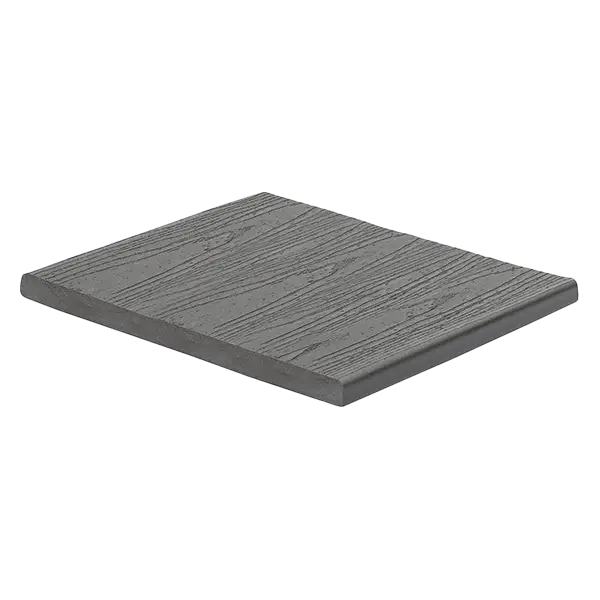
- Square-edge
- Grooved-edge
Solid boards generally contain more material and are usually heavier than boards of comparable dimensions with scalloped or hollow profiles.
Scalloped and hollow profiles can reduce material use and board weight. However, profile construction alone does not determine overall quality or suitability.
The manufacturer’s documentation should be consulted for:
- Maximum joist spacing
- Diagonal installation
- Stair-tread installation
- Picture-frame borders
- Commercial applications
- Fastener compatibility
The NRC’s CCMC evaluation for Trex confirms that its evaluated wood-thermoplastic composite boards are manufactured through a continuous extrusion process into grooved or solid cross-sections.
Step 6: Adding the Protective Cap
Many current composite decking products are capped. During production, an additional polymer layer is bonded to the composite core, commonly through co-extrusion.
The cap may cover:
- The top and two sides
- The top, sides and grooves
- All four sides of the board
Coverage varies by manufacturer and collection. Buyers should verify the specifications of the exact collection rather than assuming every board from a brand has the same cap construction.
The cap can improve resistance to:
- Moisture exposure
- Food and household stains
- Colour fading
- Surface abrasion
- Weathering
- Everyday cleaning chemicals
The cap also normally provides much of the finished board’s colour, tonal variation and surface appearance.
TimberTech provides an illustrated explanation of the core and polymer cap used in composite deck boards, including the differences between composite and PVC construction.
Capping does not mean that the surface can never develop mould or mildew. Organic debris such as pollen, leaves and dirt can remain on the surface and provide a food source for mould. Manufacturers still require routine cleaning. Trex explains this distinction in its official composite decking care and cleaning instructions.
Step 7: Creating the Wood-Grain Surface
As the board is formed, embossing rollers or other texturing equipment press a wood-grain pattern into the surface.
The design may include:
- Straight grain
- Cathedral grain
- Wire-brushed textures
- Multiple embossing patterns
- Multi-tonal streaking
- Colour variation between boards
Some entry-level products use a more repetitive embossing pattern. Higher-priced collections may use deeper textures, varied embossing and more complex colour blending.
The colour is generally incorporated into the composite material or polymer cap rather than being applied as ordinary exterior paint or wood stain.
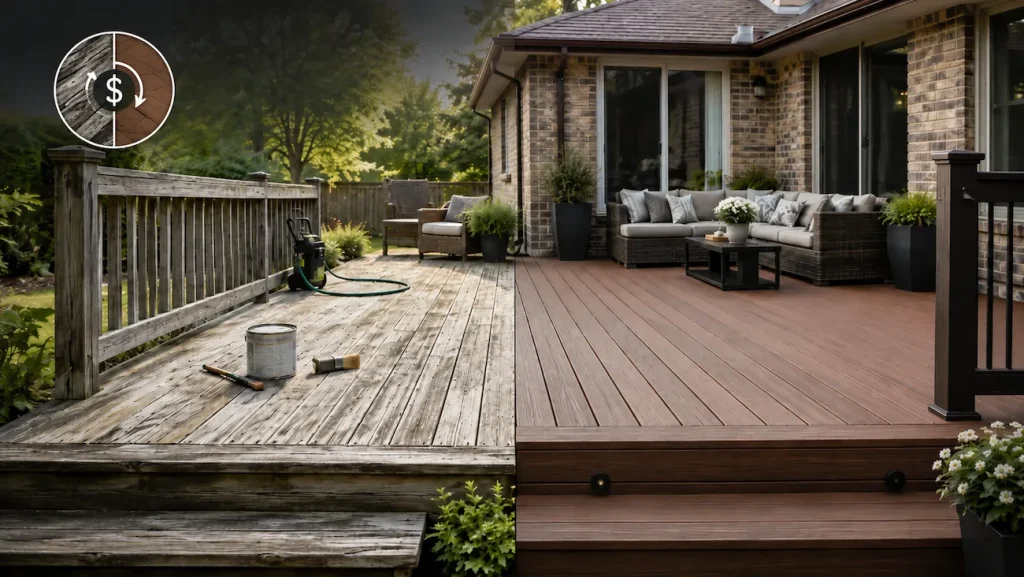
Composite decking therefore does not normally require routine sanding, staining or sealing. It still requires cleaning and must be maintained according to the manufacturer’s instructions.
Step 8: Cooling and Calibrating the Board
After extrusion and embossing, the continuous board passes through a controlled cooling and calibration system.
Cooling allows the polymer to solidify while the manufacturing equipment controls the board’s required dimensions.
This stage helps maintain:
- Board width
- Board thickness
- Profile shape
- Surface quality
- Straightness
- Dimensional consistency
Cooling too quickly, too slowly or unevenly can contribute to warping, twisting or dimensional variation. Exact cooling and calibration methods are normally proprietary to each manufacturer.
Step 9: Cutting the Boards to Length
Once cooled, the continuous profile is cut into finished board lengths.
Common decking lengths in the Canadian and Ontario market include:
- 12 feet
- 16 feet
- 20 feet
Availability varies by brand, collection, colour and board profile. The NRC’s current Trex evaluation identifies corresponding lengths of approximately 365, 487 and 609 centimetres.
Grooved edges may be formed directly by the extrusion die or produced through a later finishing process, depending on the manufacturer.
Common finished profiles include:
- Grooved-edge boards for hidden fasteners
- Square-edge boards for borders and exposed edges
- Fascia boards
- Stair-riser boards
- Wider or narrower specialty boards
Fascia and riser boards may use different dimensions, thicknesses and internal construction from the main deck boards.
Step 10: Inspecting and Testing the Finished Product
Manufacturers inspect finished boards as part of their internal quality-control programs. The exact tests vary by product, intended application and certification requirements.
Testing may include:
- Board dimensions and tolerances
- Strength and stiffness
- Deflection
- Impact resistance
- Fastener withdrawal and lateral resistance
- Dimensional change
- Thermal expansion
- Water absorption
- Accelerated ageing
- Weathering
- Surface appearance
- Colour consistency
- Stain resistance
- Slip resistance
- Flame-spread performance
Third-party evaluation does not automatically apply to every composite board sold in Canada. It applies only to the specific products, profiles, manufacturing facilities and uses identified in the evaluation.
The Canadian Construction Materials Centre registry can be used to search for active Canadian product assessments.
A CCMC assessment is a recognized form of technical evidence, but it is generally voluntary rather than universally mandatory. The final decision rests with the authority having jurisdiction.
In Ontario, contractors and homeowners should consult the current Ontario Building Code information, the local municipal building department and the manufacturer’s current technical documentation.
How Is Capped Composite Different From Uncapped Composite?
Uncapped composite decking leaves the wood-plastic or plant-fibre composite core exposed at the walking surface.
This construction was more common among early generations of composite decking. Because the exposed composite surface contains organic filler, it may be more susceptible to staining, weathering and moisture absorption than a properly capped product.
Capped composite decking adds a protective polymer surface around part or all of the core.
Depending on the product, the cap may improve:
- Stain resistance
- Fade resistance
- Moisture protection
- Surface durability
- Cleanability
- Colour and grain consistency
When comparing capped composite decking, check:
- Whether the cap covers three or four sides
- Whether the grooves are capped
- Whether the bottom is capped
- Whether the warranty covers structural performance
- Whether fade-and-stain coverage is included
- Which exclusions apply to the warranty
Four-sided capping should not automatically be treated as proof that one product is structurally stronger than another. Structural performance, span ratings, fastener systems and third-party documentation must also be considered.
Is PVC Decking Manufactured the Same Way?
PVC decking is also commonly manufactured through extrusion, but its material composition differs from wood-plastic composite decking.
Conventional composite decking contains a thermoplastic polymer combined with wood flour, sawdust or another plant-based filler.
Decking marketed as PVC decking is generally made from engineered PVC formulations without wood or other organic filler. Many PVC boards use a cellular or foamed core to reduce density and weight.
PVC decking is often lighter than a comparable wood-plastic composite board and is highly resistant to moisture throughout the material. However, weight and strength still depend on the dimensions, internal profile and formulation of the specific product.
Both composite and PVC decking may use:
- Protective polymer caps
- Co-extrusion
- Embossed wood-grain surfaces
- Multi-tonal colour blending
- Grooved or square-edge profiles
- Hidden-fastener systems
The terms “composite” and “PVC” should not be used interchangeably when comparing products. Buyers should verify the material listed in the technical data and warranty.
Why Does the Manufacturing Process Matter?
Understanding how composite decking is made helps homeowners and contractors compare more than colour and price.
The formulation and manufacturing process can affect:
- Dimensional consistency
- Strength and stiffness
- Board weight
- Moisture absorption
- Surface durability
- Colour retention
- Expansion and contraction
- Required joist spacing
- Stair-tread suitability
- Fastener compatibility
- Warranty coverage
Price is not a reliable measure of performance by itself.
A lower-priced board may perform appropriately when installed within its documented limitations. A more expensive board may provide additional aesthetic options, longer warranty coverage or a more advanced cap, but it must still be installed correctly.
For pools, docks, waterfront properties, stairs and heavily exposed decks, check the product’s approved applications and installation requirements rather than selecting solely according to price or marketing terminology.
How to Compare Composite Decking Boards
Before purchasing composite decking, ask the supplier:
- Is the product composite or PVC?
- Does the composite contain wood, rice hulls or another fibre?
- Is the polymer virgin, recycled or a combination?
- Is the board capped?
- Does the cap cover three sides or four sides?
- Are the grooves and underside capped?
- Is the core solid, scalloped or hollow?
- What joist spacing is required?
- Can the board be installed diagonally?
- Is it approved for stair treads?
- Which hidden fasteners are compatible?
- Are matching fascia and square-edge boards available?
- What expansion gaps are required?
- What does the structural warranty cover?
- Is fade-and-stain coverage included?
- Is Canadian technical or code-evaluation documentation available?
- Are replacement boards normally kept in stock?
- Can physical samples be viewed before ordering?
These questions provide more useful information than comparing appearance or price alone.
Find Composite Decking in Ontario
National Decking supplies composite and PVC decking for homeowners, contractors and deck builders across Ontario.
Available composite and PVC brands include Trex, TimberTech, AZEK, Fiberon, TruNorth, Woodbridge, Clubhouse, Zuri and other established manufacturers.
Visit a National Decking showroom to compare:
- Composite and PVC construction
- Solid, scalloped and hollow profiles
- Three-sided and four-sided capping
- Grooved and square-edge boards
- Colours and wood-grain patterns
- Matching fascia and risers
- Hidden-fastener systems
- Warranty coverage
- Current composite decking prices
Physical samples, material estimates and delivery options are available for projects throughout the Greater Toronto Area, Hamilton and surrounding Ontario communities.
Explore the complete composite decking guide or visit a National Decking location to compare boards in person.
Frequently Asked Questions
Is composite decking made entirely from recycled material?
Not always. Some products contain a high percentage of recycled wood and plastic, while others use a combination of recycled and virgin materials. Check the manufacturer’s technical information for the specific collection.
Is the colour added after the board is made?
Colour pigments are normally incorporated during manufacturing. On capped composite decking, the finished colour and grain are generally part of the protective outer layer.
What is co-extruded composite decking?
Co-extrusion is the process of forming the composite core and bonding the protective polymer cap during continuous manufacturing.
Are hollow composite boards lower quality?
Not necessarily. Hollow and scalloped profiles can reduce weight and material use. Quality depends on the complete board design, manufacturing standards and whether the product is used according to its installation requirements.
Can composite decking be recycled?
Recycling options depend on the board composition, local facilities and manufacturer programs. Composite boards cannot always be processed through ordinary municipal plastic or wood recycling systems.